
Renovation work may be finished, but that doesn’t mean the office is ready for employees.
Construction crews remove equipment and major debris, but fine dust often remains in ventilation systems, workstations, flooring, fixtures, and hard-to-reach surfaces. Paint residue, adhesive particles, packaging waste, and airborne dust can linger long after the contractors leave.
For office managers preparing a renovated space for occupancy, the final cleaning stage is often what determines whether the first day back feels professional and organized or chaotic and unfinished. So, here’s what you need to know before handing over the keys to your team.
Why Post-Construction Cleaning Is Different From Regular Office Cleaning
Many people assume a standard janitorial service can handle a newly renovated office – the reality is, post-construction cleaning is a completely different type of work.
Routine office cleaning focuses on maintaining an already clean environment. Tasks typically include vacuuming, emptying trash bins, sanitizing restrooms, and wiping down common surfaces.
Post-construction cleaning, on the other hand, starts with a different challenge altogether.
Construction projects typically leave behind drywall dust and other dirt, like sawdust, paint residue, packaging materials, and construction dirt, tracked throughout the building. Much of this material settles into places employees rarely notice until they begin using the space. Dust can accumulate on ceiling fixtures, inside vents, behind furniture, and along baseboards long after visible debris has been removed.
That’s why post-construction cleaning often requires specialized equipment, additional labor, and a more detailed cleaning process than standard maintenance services.
What A Complete Post-Construction Office Cleaning Should Include
The exact scope depends on the size of the project, but a comprehensive move-in cleaning typically covers far more than vacuuming and trash removal. The commercial cleaning experts from Michigan-based Clean Corners share the ultimate checklist for post-construction office cleaning.
Dust Removal Throughout The Entire Space
Construction dust is often the biggest issue. A proper cleaning should address:
- Ceiling surfaces
- Light fixtures
- Air vents and registers
- Window ledges
- Baseboards
- Wall surfaces
- Shelving
- Built-in cabinetry
The goal is not simply to remove visible dust but to prevent it from continuously circulating through the building after occupancy.
Detailed Surface Cleaning
Every horizontal surface becomes a magnet for construction debris. Cleaning crews typically wipe and clean:
- Reception desks
- Workstations
- Conference room tables
- Countertops
- Cabinets
- Shelving units
- Interior doors
- Door frames
Adhesive residue, fingerprints, dust films, and construction grime often require special attention.
Floor Cleaning And Finishing
Different flooring materials require different approaches. This may include:
- Commercial carpet vacuuming
- Carpet extraction when necessary
- Hard floor scrubbing
- Tile cleaning
- Floor polishing
- Removal of paint spots or adhesive residue
Floors often reveal the true extent of construction traffic once cleaning begins.
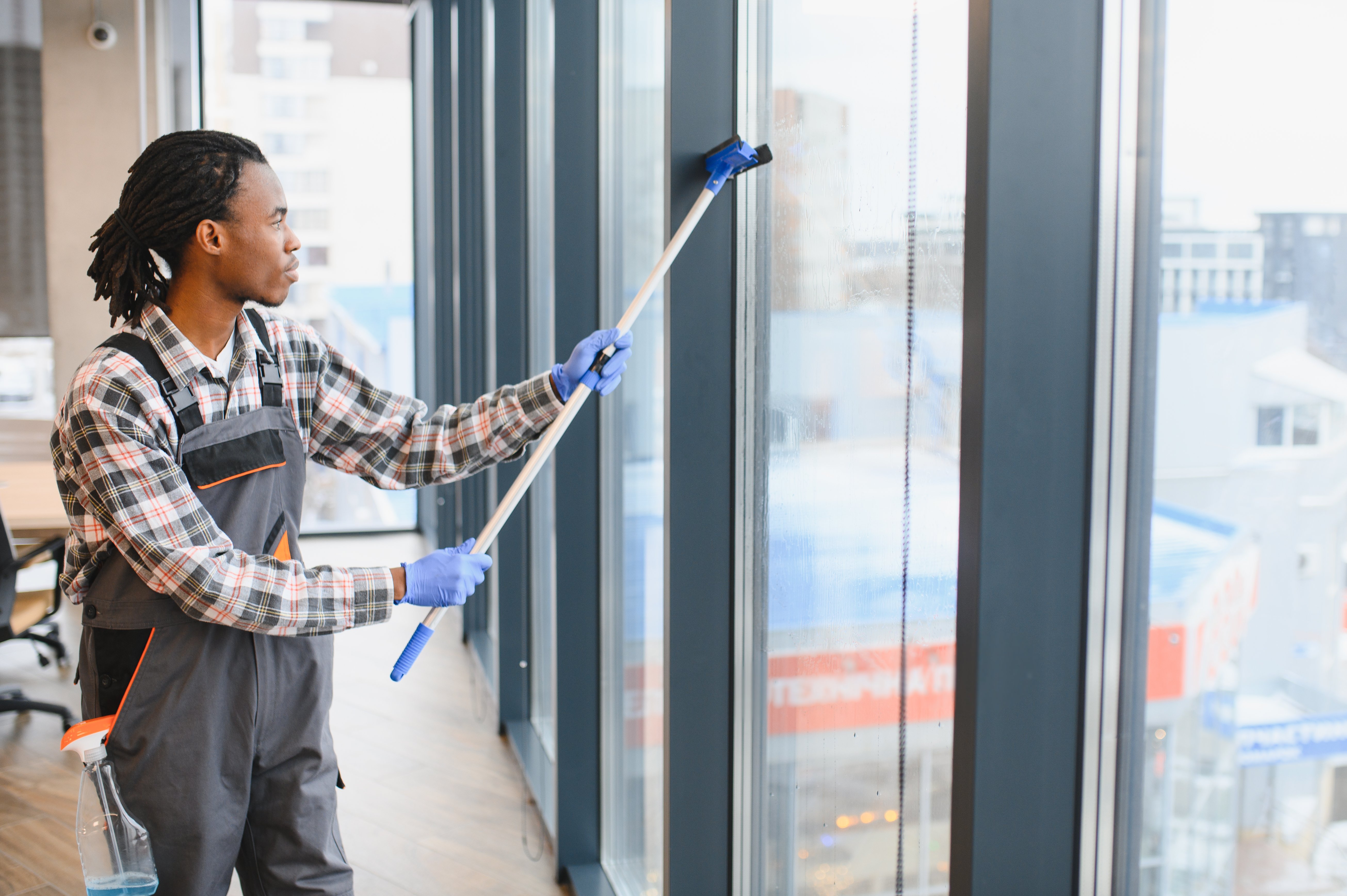
Window And Glass Cleaning
Windows frequently remain covered with dust, labels, protective film residue, smudges, and paint overspray.
Clean glass significantly improves the appearance of a newly renovated office and allows natural light to reach its full potential.
Restrooms And Break Areas
These spaces typically require full sanitization before occupancy. This includes:
- Sink cleaning
- Fixture polishing
- Countertop sanitization
- Appliance cleaning
- Cabinet wipe-downs
- Trash removal
Even newly installed areas often collect dust and debris during construction.
The Office Manager’s Move-In Cleaning Checklist
One of the easiest ways to avoid move-in delays is to create a simple readiness checklist.
Before Cleaning Begins
Confirm that:
- Construction work is fully complete
- Final inspections have been passed
- Contractors have removed equipment and materials
- Outstanding punch-list items are finished
- Utilities are active
- HVAC systems are operational
Starting cleaning before construction ends often creates unnecessary rework.
Before Employees Move In
Walk through the space and verify:
- No visible dust remains on surfaces
- Windows are clean and clear
- Floors are finished and debris-free
- Air vents appear clean
- Restrooms are fully functional
- Breakrooms are ready for use
- Trash has been removed
- No strong construction odors remain
A final walkthrough helps catch small issues before employees notice them.
Signs Your Office Isn’t Actually Ready Yet
Sometimes an office looks finished at first glance, but still needs additional cleaning. Watch for these common warning signs:
Dust Reappears Quickly
If surfaces look dusty again within a day or two, construction dust may still be circulating through the HVAC system.
Dirty Air Vents
Dust buildup around vents often signals that airborne particles remain throughout the building.
Smudged Or Cloudy Glass
New windows should look crystal clear. Residue and film can make an otherwise beautiful renovation feel unfinished.
Debris Around Baseboards And Corners
These areas are frequently missed during rushed cleanups.
Lingering Construction Odors
Paint, adhesives, and other building materials can leave behind noticeable odors if cleaning and ventilation have been insufficient.
These small details often shape employees’ first impressions more than managers expect.
How To Hire A Post-Construction Cleaning Company
Not every cleaning company specializes in post-construction projects. When evaluating providers, ask questions such as:
- Have you handled commercial post-construction cleanings before?
- What’s included in your cleaning scope?
- Do you clean vents, high surfaces, and fixtures?
- Are you insured?
- Can you provide references from similar projects?
- How long will the cleaning process take?
- Can you work around our move-in timeline?
Experience matters – a company that regularly cleans active office buildings may not necessarily have the equipment or processes needed for heavy post-construction cleanup.
How Long Does Final Move-In Cleaning Take?
There is no universal timeline. Several factors affect project duration, like the square footage, amount of construction completed, flooring types, number of windows, furniture installation status, and number of cleaning technicians assigned.
A small office refresh may require only a few hours. A large renovation project could require multiple days of detailed cleaning and inspection. That’s why scheduling should begin well before employees are expected to return.
Common Post-Construction Cleaning Mistakes
Office managers often encounter the same avoidable issues.
Moving Employees In Too Soon
Construction schedules frequently run tight, but rushing occupancy often creates frustration and disruption.
Assuming Contractors Cleaned Everything
Most contractors remove major debris. They are not usually responsible for detailed occupancy-ready cleaning.
Ignoring HVAC Dust
Even a spotless office can become dusty again quickly if vents and surrounding areas are overlooked.
Focusing Only On Visible Areas
Dust accumulates on high ledges, fixtures, vents, and hidden surfaces just as easily as it does on desks.
Choosing Based On Price Alone
The lowest quote may not include the level of detail needed to truly prepare a workspace for occupancy.
Ready To Move In
Construction may mark the end of a renovation project, but it doesn’t necessarily mean the office is ready for business.
Final move-in cleaning bridges the gap between construction site and workplace. It removes the dust, residue, and debris that remain after contractors leave and helps ensure employees return to a clean, professional environment.
For office managers overseeing renovations, relocations, or office upgrades, a thorough post-construction deep cleaning is often the final step that determines whether move-in day feels organized and productive or rushed and unfinished.
Clean Corners LLC
rbarrett1844@gmail.com
+16166447991
4445 44th Street Southeast
Suite A
Grand Rapids
MI
49512
United States


