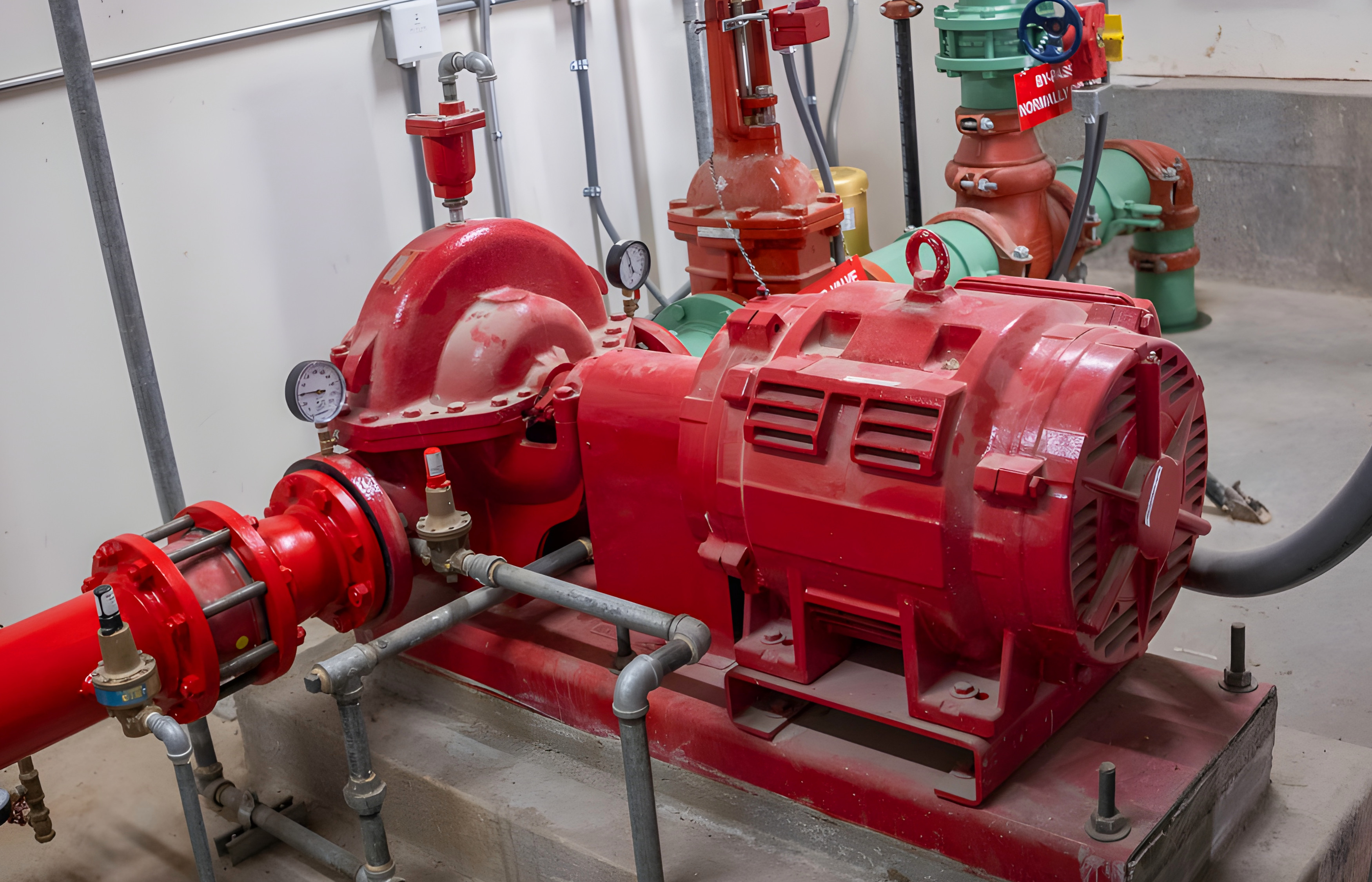
Kord Fire Protection explains why fire pump inspection, testing, maintenance, and documentation support building readiness.
STUDIO CITY, CA, UNITED STATES, September 8, 2026 /EINPresswire.com/ — Kord Fire Protection is sharing guidance for facility owners, property managers, building engineers, and compliance teams on the importance of fire pump inspection and testing as part of a complete fire protection program.
Fire pumps play a critical role in buildings where the available water supply may not provide enough pressure or flow on its own. In high-rise buildings, warehouses, industrial facilities, hospitals, schools, parking structures, multifamily properties, and large commercial sites, a fire pump may be the equipment that allows sprinkler systems, standpipes, hose valves, and other water-based fire protection systems to perform as designed during an emergency.
Because fire pumps often remain idle during normal building operations, they can be easy to overlook. However, a pump that has not been properly inspected, tested, maintained, or documented can create serious uncertainty when the system is needed. Fire pump readiness is not only about whether the equipment is installed. It is about whether the pump can start, run, build pressure, move water, communicate supervisory signals, and support the fire protection demand placed on the building.
NFPA 20 provides requirements for the installation of stationary fire pumps for fire protection, including pump selection, drivers, controllers, suction and discharge arrangements, and performance considerations. NFPA 25 provides the inspection, testing, and maintenance framework for water-based fire protection systems, including fire pump inspection and testing. Together, these standards help facility teams understand that pump reliability depends on design, installation, routine service, testing, and correction of deficiencies.
A complete fire pump program may include visual inspections, controller checks, valve position review, gauge readings, pump room condition review, alarm and supervisory signal verification, no-flow or churn testing, annual flow testing, fuel or power supply review, battery review for diesel systems, and documentation of deficiencies. The exact requirements can vary based on pump type, building use, local code adoption, insurance requirements, and the Authority Having Jurisdiction.
Common fire pump concerns may include loss of pressure, failed automatic start, controller trouble, closed or partially closed valves, leaking packing, overheating, fuel supply problems, battery issues, corroded piping, damaged gauges, blocked pump room access, missing test records, or annual flow results that no longer match the expected system performance.
Electrical coordination is also an important part of fire pump reliability. Electric fire pumps depend on dedicated power supplies, controllers, service equipment, wiring methods, disconnecting means, overcurrent protection, emergency power coordination, and safe electrical service practices. When pump performance depends on power delivery, alarm communication, control wiring, or emergency backup systems, fire protection review should not be separated from the broader pump system review.
Fire pump resources can also help facility teams better understand how pump performance, power, inspection records, and testing requirements work together as part of a complete building safety plan.
Documentation is another major part of fire pump compliance. Facility owners should maintain inspection records, pump test results, flow data, pressure readings, impairment notices, repair history, and corrective action documentation. These records may become important during fire department reviews, insurance evaluations, property transactions, facility audits, and post-incident investigations.
The importance of fire pump reliability is not limited to the United States. Through fire protection services in Australia, Kord Fire Protection continues to support educational resources for facility owners and operators reviewing sprinkler, pump, hydrant, and water-based fire protection needs across different code environments.
For building owners, fire pump inspection and testing should remain part of ongoing facility risk management. A reliable pump supports pressure, flow, compliance, documentation, and emergency readiness. A neglected pump can create risk long before a visible problem appears.
Kord Fire Protection advises facility teams to review fire pump records, confirm required testing intervals, correct deficiencies promptly, and coordinate fire protection and electrical review when pump performance depends on controllers, dedicated power, alarm monitoring, emergency power, or related building infrastructure.
Darius Kordabadi
Kord Fire Protection
+1 800-918-8978
email us here
Visit us on social media:
LinkedIn
Instagram
YouTube
TikTok
X
Other
Legal Disclaimer:
EIN Presswire provides this news content “as is” without warranty of any kind. We do not accept any responsibility or liability
for the accuracy, content, images, videos, licenses, completeness, legality, or reliability of the information contained in this
article. If you have any complaints or copyright issues related to this article, kindly contact the author above.

Media gallery